Introduction
Did you know that more than 95% of organizations improve their operational efficiency after modernizing their ERP system? With fast-changing market demands, automation, AI, and cloud adoption, the future of enterprise resource planning systems is transforming faster than ever.
Today’s business owners, students exploring enterprise technologies, marketing beginners, and tech professionals all want the same answer: Where are ERP systems heading next?
If you’re unsure about upgrading your ERP platform or want clarity on upcoming ERP future trends, this article will break it down in a simple, friendly, and insightful way. And if you’d like expert guidance tailored to your organization’s needs, you can book a consultation here:
👉 https://appt.link/meet-with-chetan-chitriv-0E0czwAl/web-conference
By the end of this blog, you’ll learn:
- The biggest ERP shifts happening right now
- How AI, automation, and cloud ERP are reshaping workflows
- What ERP 2025 trends mean for small and large enterprises
- How to prepare your business for the next generation of ERP
Rise of Intelligent Automation in the Future of ERP Systems
The future of ERP systems is driven by automation and intelligence. Modern ERP solutions are no longer passive data repositories—they are becoming proactive business decision engines.
Key Trends in ERP Automation:
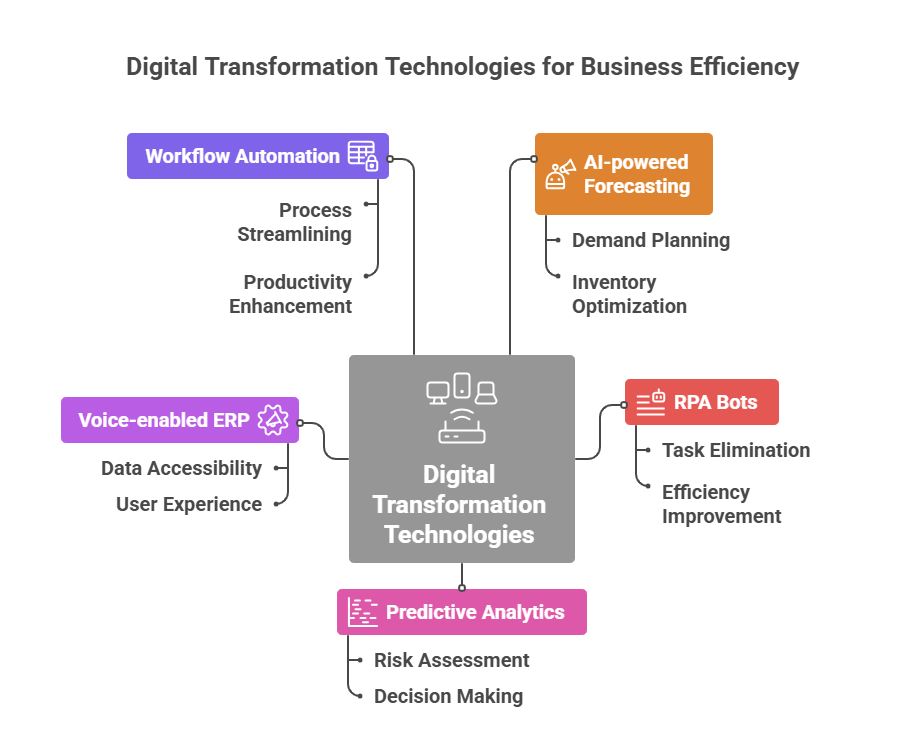
- AI-powered forecasting for demand planning and inventory optimization
- RPA bots for eliminating repetitive tasks
- Predictive analytics for risk management
- Voice-enabled ERP for faster data access
- Workflow automation across finance, HR, and supply chain
Why It Matters:
Automation reduces human error, speeds up operations, and enables real-time decision-making — essentials for modern enterprises striving for efficiency and scale.
The Shift Toward Cloud-Native & Modular ERP Architectures
A major component of ERP future trends is the transition from traditional on-premise systems to cloud-based, modular ERP architectures.
Why Cloud ERP Is Dominating:
- Faster deployment
- Lower maintenance costs
- 24/7 remote accessibility
- Enhanced scalability
- Integrated security and backups
Mini Case Study:
A growing manufacturing startup adopted a cloud ERP system that allowed teams across locations to collaborate instantly. Instead of 3 months of manual reporting, automated dashboards now provide real-time insights, helping leadership make proactive decisions.
This shift shows why modern ERP evolution is centered around flexibility, mobility, and real-time intelligence—something legacy ERPs struggle to deliver.
Step-by-Step Guide: How to Prepare Your Business for the Future of Enterprise Resource Planning Systems
Step 1: Evaluate Your Current ERP Limitations
Identify gaps in reporting, automation, usability, integration, and scalability.
Step 2: Choose Between Cloud, Hybrid, or On-Premise ERP
- Cloud ⇒ best for modern mobility and scalability
- Hybrid ⇒ ideal for gradual transition
- On-prem ⇒ only where strict data control is required
Step 3: Prioritize AI, Automation & Analytics
Your new ERP must include:
- Predictive insights
- Automated workflows
- Real-time reporting dashboards
Step 4: Ensure Mobile Accessibility
Modern teams expect ERP access on-the-go—mobile-first ERP is no longer optional.
Step 5: Plan for Integration Capabilities
Your ERP should seamlessly integrate with:
- CRM
- Payroll
- Inventory
- HRMS
- Project tools
- Custom software solutions
Step 6: Train Teams for Smooth Adoption
A well-trained workforce ensures higher ROI and reduces operational friction.
FAQ: Why Are Modern ERP Systems Important for Small Businesses?
Why are modern ERP systems crucial for small businesses today?
Small businesses need agility, automation, and real-time insights to compete in fast-moving markets. The future of enterprise resource planning systems brings affordable cloud ERP platforms, modular tools, and AI-driven decision support—letting even small teams operate with enterprise-grade efficiency.
Conclusion
The future of enterprise resource planning systems is intelligent, cloud-driven, automated, and deeply integrated. ERP 2025 trends show a clear shift toward real-time data, AI-based automation, mobile-first interfaces, and flexible modular systems that grow with your business.
If you’re planning to upgrade or modernize your ERP, or want expert recommendations for your specific business needs, you can book a personalized session here:
👉 https://appt.link/meet-with-chetan-chitriv-0E0czwAl/web-conference
Recommended Websites
- https://avestantechnologies.com/
- https://www.talentrisetechnokrate.com/
- https://technokrate.com/
- https://www.softwavetechify.com/
- https://chetanchitriv.in/
Related Reading
Creating an Enterprise-Level Data Analytics Dashboard — https://talentrisetechnokrate.net/wp-admin/post.php?post=15122&action=edit
If you enjoyed this article, feel free to subscribe, explore more topics, or reach out to Talentrise Technokrate Pvt Ltd for cutting-edge ERP development and modernization services.